Key points at a glance
- Applicants want to know first: What will I earn, when do I work, where do I work and who with? Answer that in concrete terms on your careers page.
- In Austria, job ads must state the minimum pay under the collective agreement. In Germany, stating pay is still voluntary, but it is a strong selling point.
- For apprenticeships (Lehre in AT, Ausbildung in DE), the page should cover apprentice pay, vocational school and taster days.
- A quick application by form or WhatsApp that takes two minutes gets far more responses than “application with CV and references”.
- With JobPosting markup, your vacancies appear in Google's job search. On top of that come the free job boards of the AMS and the Bundesagentur für Arbeit.
This article is general information, not legal or tax advice. Rules change: check the details with your economic chamber or chamber of crafts, your trade guild or your tax adviser.
Why your own website matters for recruitment
Anyone who becomes interested in your business, whether through an ad, a friend or your company van at the traffic lights, looks at your website next. If all they find there is “We are looking for committed employees (m/f/d)”, the interest fades fast. If they find pay, working hours, photos of the team and an easy way to apply, they call. Your careers page is the destination every other channel points to.
What applicants want to know
A journeyman who has been with the same firm for five years does not switch jobs because of a nice mission statement. He switches when he sees that things are better elsewhere: more money, shorter journeys, Friday afternoons off, more modern tools, the chance to do his master craftsman qualification. Write it all down as concretely as you can.
| Topic | Concrete rather than vague |
|---|---|
| Pay | “From … euros gross per month, more depending on experience” instead of “performance-related pay” |
| Working hours | “Mon to Thu 7 am to 4 pm, Fri 7 am to 12 noon, overtime paid or credited as time off in lieu” |
| Work area | “Sites within 40 km, no weeks away on assembly jobs” |
| Company vehicle | “Your own company van, also for the journey home” (only if true) |
| Tools and workwear | “Cordless tools from …, workwear provided and laundered” |
| Training | “We pay for manufacturer training and support you through your master craftsman exam” |
| Team | “8 people, including 2 apprentices, breakfast together on Mondays” |
Advertise jobs in a gender-neutral way, for example with “(m/f/d)” (in German “(m/w/d)”) or with neutral wording. This is required in Austria by the Gleichbehandlungsgesetz (Equal Treatment Act) and in Germany by the AGG (General Equal Treatment Act). Photos that also show a female electrician or painter say more than any brackets.
Stating pay: mandatory in Austria, an advantage in Germany
In Austria, employers must state in every job advertisement the minimum pay that applies to the position under the collective agreement (Kollektivvertrag, KV) and indicate whether they are willing to pay more (§ 9(2) Gleichbehandlungsgesetz). This also applies to the careers page on your website and to part-time jobs. A wording such as “The minimum pay under the collective agreement for this position is … euros gross per month, higher pay depending on qualifications” meets the requirement. Breaches can lead to an administrative fine after a first warning.
In Germany, there is so far no general obligation to state pay in a job ad. The EU Pay Transparency Directive (2023/970) requires applicants to receive information on the starting salary or pay range before the interview. The transposition deadline expired in June 2026, but the German implementing act was still pending in November 2026. In Austria, too, the transposition may bring further obligations. Keep an eye on developments. Regardless of that, in practice ads that state pay attract more applications and better-matched ones.
Apprenticeships in Austria and Germany
Young people and their parents read differently from experienced tradespeople. They want to know what you learn at the business, how vocational school is organised, whether there is help with the driving licence and what happens after the apprenticeship. And they want to see who the other apprentices are.
- Austria (Lehre): apprentice pay (Lehrlingsentschädigung) is set by the collective agreement for your trade, so state the amount for each year of the apprenticeship. Mention the “Lehre mit Matura” option (apprenticeship combined with the school-leaving exam), the final apprenticeship exam (Lehrabschlussprüfung) and the later master craftsman or qualification exam (Meister- or Befähigungsprüfung). If you are training apprentices for the first time, the apprenticeship office (Lehrlingsstelle) of the Wirtschaftskammer, the Austrian Economic Chamber, must first confirm you as a training business.
- Germany (Ausbildung): the statutory minimum training allowance (Mindestausbildungsvergütung) for apprenticeships starting in 2026 is €724 gross in the first year; €764 has been announced for those starting in 2027 (as of November 2026). Collective agreements may set different, usually higher, rates. To train apprentices, you must be professionally and personally suitable, which in the trades usually means holding the master craftsman qualification or the trainer aptitude certificate (Ausbildereignung).
- Both countries: offer taster days or a work placement, with a form that parents can use to get in touch as well. Many apprenticeships start with a taster week.
Quick applications by form or WhatsApp
A tiler who spots your vacancy on the sofa in the evening after a day on site is not going to write a cover letter or scan her certificates. She will send a message if it takes two minutes. So offer a quick application: name, phone number, trade or apprenticeship, years of experience and a field for “When is the best time to reach you?”. CV optional. Everything else can be sorted out on the phone or during a trial day.
If you offer WhatsApp, use a separate business number and mention it in your privacy policy. Use application data only for the recruitment process and delete it once the process is over. It is common practice to keep it for around six months after a rejection, because of possible claims under equal treatment law. If you want to keep data longer in a talent pool, ask for consent.

Photos of your team
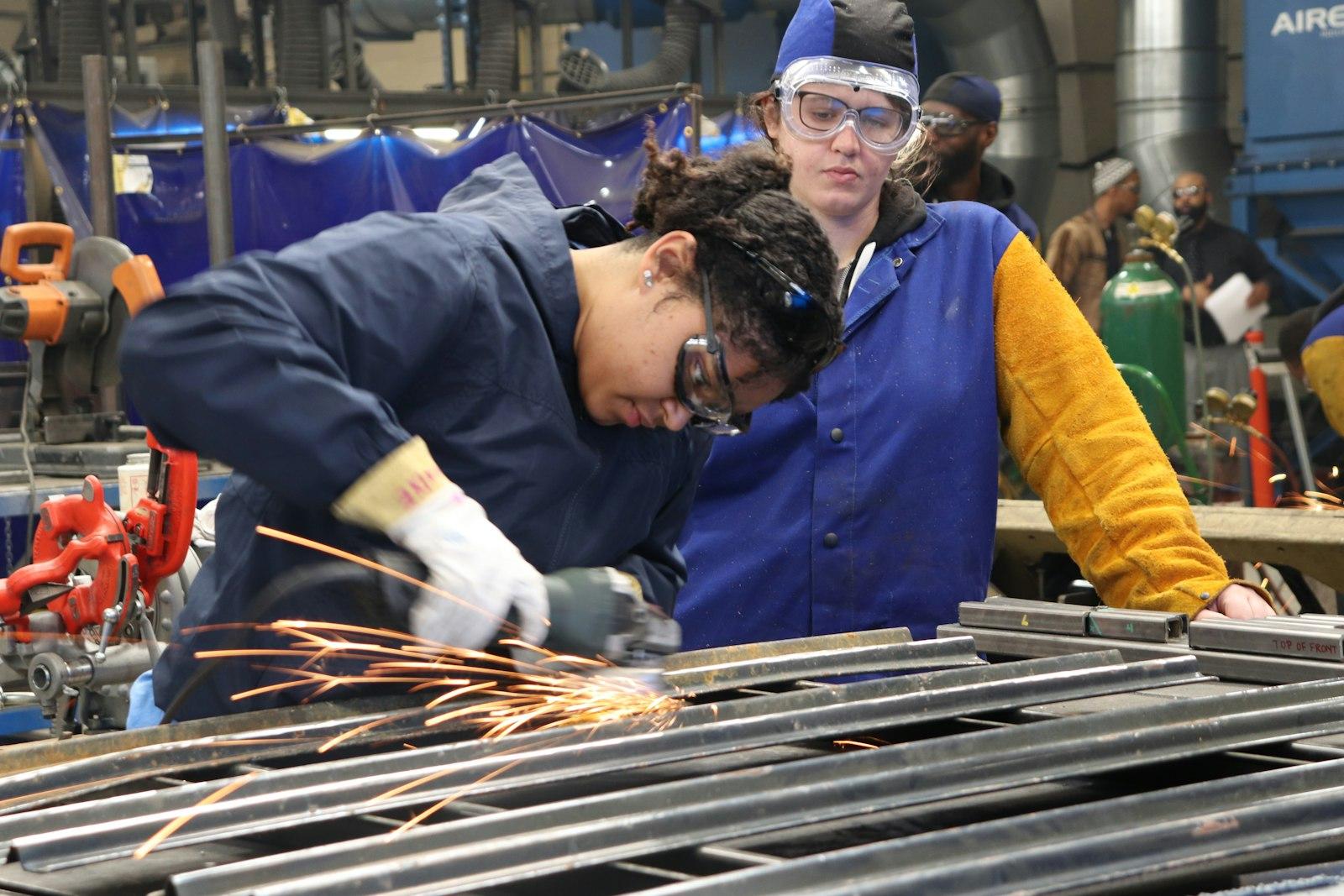
Every tradesperson can spot stock photos of smiling models in overalls at a glance. Show your real team instead: in the workshop, on site, at the summer barbecue, your vehicle fleet, the new vehicle lift. One or two short quotes from employees (“I have been here since my apprenticeship, and now I am doing my master's”) are more credible than any advertising copy. Get written consent from the people shown for both photos and quotes; see also References and reviews.
Google for Jobs: your vacancies in Google's job search
Anyone searching Google for “electrician job Linz” or “apprenticeship plant mechanic Nuremberg” often sees a separate jobs box listing vacancies from many sources. Your vacancies can appear there too, straight from your website, if every job has its own page with structured data of the JobPosting type. Google supports this in Austria and Germany, among other countries.
- Required fields in the markup: job title, description, date posted, employer and job location.
- Recommended: pay (baseSalary, only the employer's actual pay), type of employment (full-time, part-time, apprenticeship) and the expiry date (validThrough).
- Keep it up to date: take filled positions off your website straight away or mark them as expired. Outdated ads annoy applicants and can lead Google to stop showing your vacancies.
Free job boards and other channels
Your careers page is the foundation, but not the only channel. These job boards are free for businesses and are used by many skilled workers and young people looking for an apprenticeship:
| Job board | Country | For |
|---|---|---|
| AMS eJob-Room | AT | Skilled and unskilled workers, free, with access to applicant profiles (AMS is the Austrian public employment service) |
| Lehrstellenbörse by AMS and WKO | AT | Open apprenticeship positions |
| Jobbörse of the Bundesagentur für Arbeit | DE | Skilled workers and apprenticeships, free (the German Federal Employment Agency) |
| Lehrstellen-Radar of the Handwerkskammern | DE | Apprenticeships and work placements in the trades, free via your chamber of crafts |
Then there are channels only trades businesses have: a “We are hiring” sticker with a QR code on your company van, a banner on the site fence of every job, a notice at the vocational school and a referral bonus for employees who recommend someone. All of these channels link to the same careers page.
How to put your careers page together
Clarify your offer
What can you genuinely offer? Pay, working hours, vehicle, tools, training. Ask your team why they work for you.
One page per vacancy
Every open position and every apprenticeship gets its own page, with concrete details and pay.
Set up quick applications
A form with just a few fields and, if someone looks after it, a WhatsApp contact.
Photos and quotes
A photo day with the team, consent forms signed, two or three short quotes.
Spread the word
List the vacancies on the job boards, put a QR code on your company van and site fence, add a link to your Google profile and email signature.
Careers page checklist
- Pay stated (in Austria with the KV minimum pay and a note on higher pay)
- Working hours, work area and time away on assembly jobs described honestly
- Company vehicle, tools, workwear and training named specifically
- Gender-neutral job advertisement
- Apprenticeship with pay and taster days
- Quick application possible in two minutes
- Real team photos with consent
- JobPosting markup and expiry date for every vacancy
- Vacancies listed on the AMS or Arbeitsagentur job board and the apprenticeship board
- Filled positions removed straight away
How the careers page fits into the rest of your website is covered in the guide What belongs on a trades website. How to get found locally, including by applicants from your area, is explained in Local SEO for tradespeople.
A website with a careers page
We will build you a free draft with your services, references and a careers page for skilled staff and apprentices. In 3 days, no obligation.
A free draft of your future business website.
Sources
- Gleichbehandlungsgesetz (GlBG), § 9 gender-neutral job advertisements, pay information – RIS
- Allgemeines Gleichbehandlungsgesetz (AGG), § 11 job advertisements
- WKO: Stating the minimum pay in job ads
- Berufsbildungsgesetz (BBiG), § 17 right to remuneration and minimum allowance
- BIBB: Mindestausbildungsvergütung (minimum training allowance)
- Directive (EU) 2023/970 on pay transparency – EUR-Lex
- Google Search Central: Job posting structured data (JobPosting)
- AMS: eJob-Room for businesses
- WKO: Lehrstellenbörse
- Bundesagentur für Arbeit: Report a vacancy
- ZDH: Lehrstellen-Radar