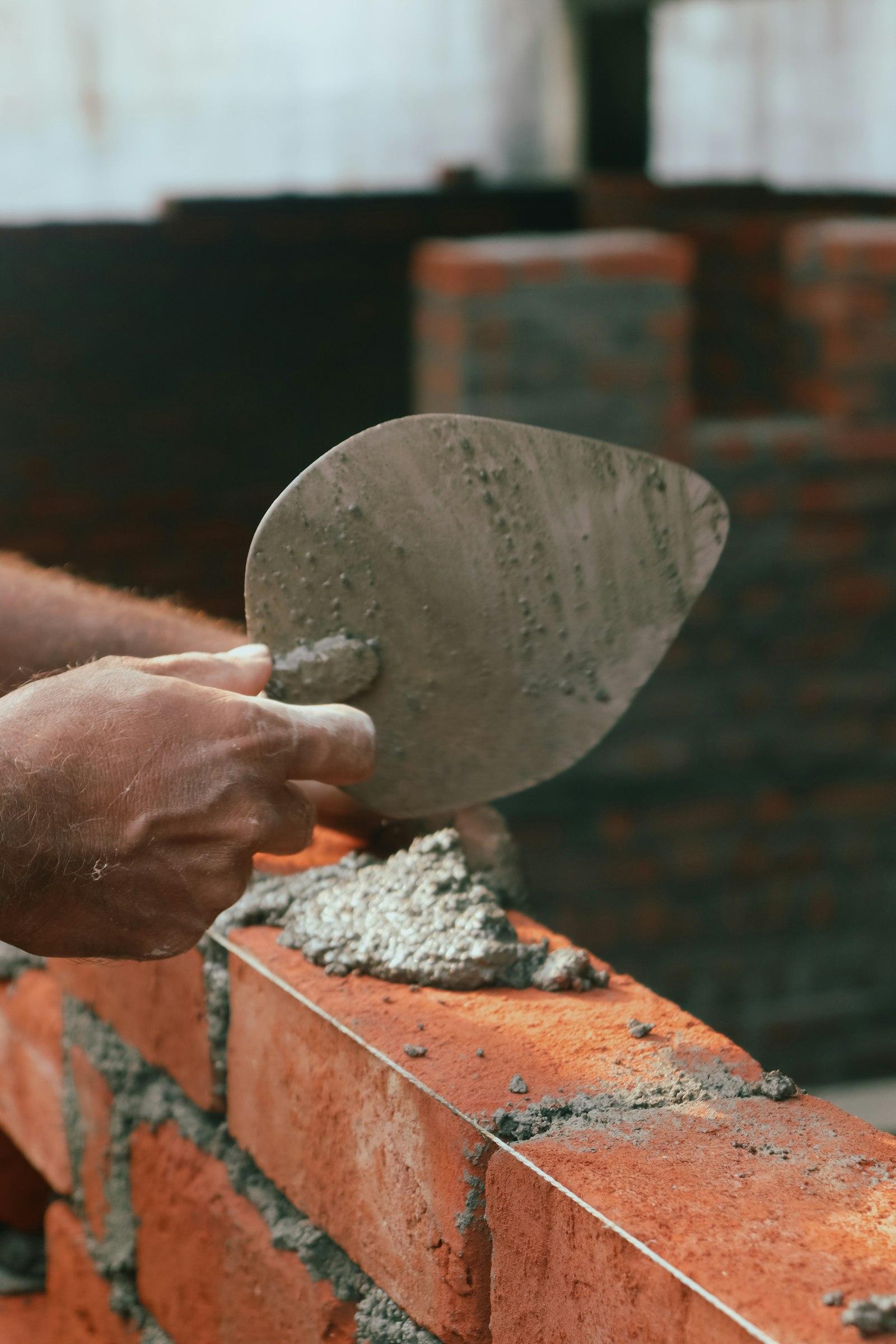
Key points at a glance
- Maurer und Betonbauer (bricklayer and concrete builder) is no. 1 in Annex A of the Handwerksordnung (Crafts Code). To be entered in the Handwerksrolle you need a master's certificate, an equivalent qualification, an operations manager or an exception under § 7b or § 8 HwO.
- With your first manual employee you pay into SOKA-BAU: since 1 July 2026, 19.8 % of gross wages in the West tariff area.
- Your client withholds 15 % Bauabzugsteuer (construction withholding tax, § 48 EStG) if you do not present a Freistellungsbescheinigung (exemption certificate) under § 48b EStG. Apply for it together with your tax registration.
- There is currently no sector minimum wage in main construction. The statutory minimum wage applies (2026: €13.90), or the higher collectively agreed wage in businesses bound by the agreement.
- Master bricklayers may only submit planning applications in some federal states and only for small buildings. What counts is the relevant Landesbauordnung (state building code).
This article is general information, not legal or tax advice. Rules change: check the details with your economic chamber or chamber of crafts, your trade guild or your tax adviser.
Meisterpflicht: which crafts a construction company needs
"Construction company" is not a craft of its own. What matters is which work you carry out yourself. For classic shell construction, that is Maurer und Betonbauer (Annex A no. 1). If you also put up roof structures, you need Zimmerer (carpenter, no. 3); for paving and civil engineering, Straßenbauer (road builder, no. 5) applies; for plastering and drywall, Stuckateure (plasterers, no. 9). Under § 5 HwO you may take on work in another craft if it is technically or professionally connected with your job or complements it economically. Basement waterproofing for a new build counts; a separate roofing business does not.
| Route | Requirement | Suits |
|---|---|---|
| Master craftsman exam | Maurer- und Betonbauermeister, four exam parts | the classic route, including the right to train apprentices |
| Equivalent qualification (§ 7 (2) HwO) | e.g. civil engineer or state-certified building technician | site managers with a degree or technician school |
| Operations manager (Betriebsleiter) | an employed master craftsperson takes on technical management | founders with a business background |
| Ausübungsberechtigung (§ 7b HwO) | journeyman's exam and six years of work, four of them in a senior position | experienced foremen and charge hands |
| Ausnahmebewilligung (§ 8 HwO) | knowledge and skills are proven another way; case-by-case decision by the chamber | career changers with documented experience |
Master's school usually costs a low five-figure sum, depending on the chamber and format (full-time or part-time). Aufstiegs-BAföG (the state grant for advanced vocational training) covers a large part of the course and exam fees as a grant. Ask your Handwerkskammer (chamber of crafts) about the current terms before you enrol.
Registration: seven offices in the right order
Handwerkskammer
Apply for entry in the Handwerksrolle with your master's certificate or other proof. You need the registration certificate for the trade office.
Gewerbeamt
Gewerbeanmeldung (trade registration) with your municipality. The office informs the tax office, the employers' liability insurance association and the chamber, but do not rely on it.
Tax office
Tax registration questionnaire via ELSTER. Apply for the exemption certificate under § 48b EStG and the USt-IdNr. (VAT ID) at the same time.
BG BAU
Register within one week of opening the business (§ 192 SGB VII). As the owner you are not automatically insured; voluntary owner's insurance is strongly recommended in construction.
Employment agency and health insurer
Apply for a company number (Betriebsnummer) and register employees before they start. On building sites, immediate registration and the duty to carry ID apply to all staff.
SOKA-BAU
With your first manual employee you register the business and report gross wages and headcount every month.
Handelsregister (for a GmbH)
Notarised articles, share capital €25,000, of which at least €12,500 paid in. A sole trader is only entered in the commercial register once the business reaches a commercial scale.
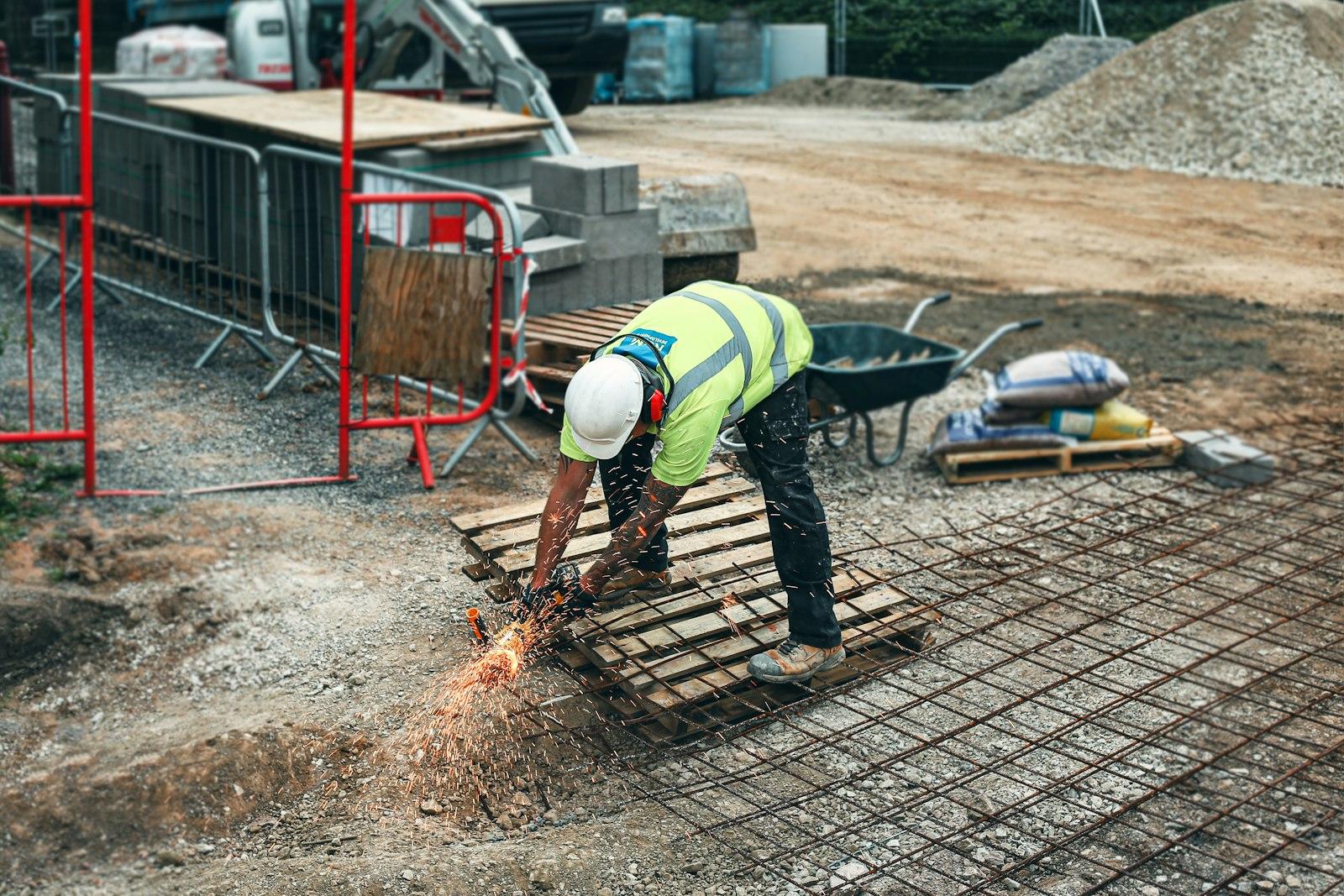
SOKA-BAU: what the social fund costs and what it pays
The collective agreement on the social fund procedure in construction (VTV) is generally binding. It therefore applies to every construction business with manual workers, even without membership of an employers' association. In return, SOKA-BAU reimburses the holiday pay you pay out, contributes to training costs and funds the supplementary pension. The contributions (as of 1 July 2026):
| Tariff area | Holiday | Vocational training | Supplementary pension | Total |
|---|---|---|---|---|
| West | 14.7 % | 1.9 % | 3.2 % | 19.8 % |
| East | 14.7 % | 1.9 % | 1.7 % | 18.3 % |
| Berlin (West / East) | 14.7 % | 1.65 % | 3.2 % / 1.7 % | 25.25 % / 23.75 % (incl. 5.7 % social costs) |
A worked example: three bricklayers with combined gross wages of €11,000 a month cost you around €2,180 in SOKA contributions in the West, on top of social security contributions. Then there is the winter employment levy (1 % in total since 2026), which funds seasonal short-time allowance. Build these rates into your hourly rate from day one. If you price at €45 an hour because your competitor does, you usually only notice the gap in your second winter.
Construction withholding tax and reverse charge: two rules your account will feel
Business clients, meaning general contractors and developers but also landlords of flats, must withhold 15 % Bauabzugsteuer from every invoice for construction work and pay it to the tax office (§ 48 EStG). This only falls away if you present a valid Freistellungsbescheinigung (§ 48b EStG) or the payments stay below €5,000 a year (€15,000 for certain landlords). Your tax office issues the certificate on application if no tax claim appears to be at risk. Clients can check it online with the Bundeszentralamt für Steuern (Federal Central Tax Office).
The second rule is the reversal of tax liability under § 13b UStG. If you work as a subcontractor for a business that itself regularly provides construction work, you invoice net and the client owes the VAT. The client proves this with a certificate from its tax office (form USt 1 TG, valid for up to three years). If the note is missing from your invoice or you show VAT wrongly, you still owe it. The small business scheme (up to €25,000 turnover in the previous year and €100,000 in the current year) hardly matters for construction companies, because materials and wages quickly push you past the limit.
Guarantees, interim payments and security
In construction you are rarely paid in advance, but often asked for security. Under VOB/A, public clients may demand up to 5 % of the contract sum as performance security and up to 3 % for defect claims. Private general contractors follow this. Instead of withholding cash, most accept a guarantee (Bürgschaft) from your bank or a surety insurer. For that you need a guarantee facility, and you get one more easily with a business plan and equity before your first big job than after it.
- You may demand interim payments for work done (§ 632a BGB). In a consumer construction contract they are capped at 90 % of the total price, and with the first interim payment you must provide 5 % security for defect-free completion (§ 650m BGB).
- From business clients you can demand Bauhandwerkersicherung (security for your contract price, § 650f BGB). It is a strong tool when a customer is slow to pay.
- For a new house built for private customers you need a Baubeschreibung (building specification) under § 650j BGB, and customers have a right of withdrawal.
May you submit planning applications as a master craftsperson?
That is a matter for each federal state. Many state building codes provide a kleine Bauvorlageberechtigung (limited right to submit planning applications) for masters of the bricklaying, concrete or carpentry crafts, but with very different scope. In North Rhine-Westphalia it applies to building classes 1 and 2. Rhineland-Palatinate requires recognition through the chamber of architects and two years of work as a master, and limits it to small residential buildings with no more than two flats. Other states do not allow it at all or only after entry in a list. Check the current version of your state building code and ask your Handwerkskammer before you offer design services. And then take out liability insurance that covers design errors.
Start-up capital: a realistic range
| Area | Amount (approx.) | Note |
|---|---|---|
| Tipper or flatbed 3.5 t | €30,000 – €55,000 | much cheaper used, leasing possible |
| Machines and tools (mixer, compactor, masonry saw, laser, cordless tools) | €10,000 – €20,000 | hire excavators and scaffolding at first |
| Formwork, props, small scaffolding | €8,000 – €25,000 | hired formwork for larger walls |
| Insurance (business liability, contract works, machinery, vehicle) | €4,000 – €10,000 a year | design cover only needed if you submit planning applications |
| Software for quotes, measurement, payroll | €1,500 – €4,000 a year | payroll with SOKA reporting |
| Cash reserve | three months' wages plus materials | because of payment terms and retentions |
How to get it right
- Keep your exemption certificate and SOKA clearance certificate to hand; general contractors ask for both
- Clarify for every contract whether VOB/B has been agreed
- Take measurements together with the customer and have them signed
Better not
- Bid for public tenders without a guarantee facility
- Use subcontractors who have no exemption certificate of their own
- Put off SOKA registration: contributions are claimed retrospectively
Show your references before the client calls
We create a free draft of your website with services, projects and service area. You see the result in three days.
A free draft of your future business website.
Your first jobs
Many founders start with conversions, renovations and extensions for private customers. No construction withholding tax applies there, margins are better than in subcontracting, and every finished site becomes a reference. Take before and after photos and get the clients' permission to publish them, as described in the article on references and reviews. Your website imprint also needs your Handwerkskammer and your professional title; details are in mandatory information for Germany and in the imprint generator. What is allowed when you advertise as a "Meisterbetrieb" (master craftsman business) is explained in the article on advertising for trades businesses.
Checklist: construction company in Germany
- Entry in the Handwerksrolle (Maurer und Betonbauer, others if needed)
- Trade registration and tax registration
- Exemption certificate under § 48b EStG applied for
- BG BAU within one week, owner's insurance checked
- SOKA-BAU registration with the first manual employee
- Hourly rate calculated with SOKA, winter levy and downtime
- Guarantee facility discussed with the bank
- Planning application rights under state law clarified
The general founding steps for all trades, from business plan to health insurance, are in the guide starting a trades business in Germany.
Sources
- Handwerksordnung, Annex A
- Handwerksordnung, § 5
- Handwerksordnung, § 7b
- EStG, § 48 (Bauabzugsteuer)
- EStG, § 48b (Freistellungsbescheinigung)
- UStG, § 13b
- BGB, § 650m
- SGB VII, § 192 (duty to register)
- SOKA-BAU – contribution rates from 1 July 2026
- BG BAU – compulsory insurance for businesses
- Zoll – overview of sector minimum wages