Key points at a glance
- The Baumeister (master builder) trade is regulated (§ 94 no. 5 GewO). If you only want to build and not design, you can register a restricted building trade (eingeschränktes Baugewerbe), but you may not call yourself "Baumeister".
- For the full scope you need the Baumeister exam (three modules) plus practical experience: three to six years depending on your training, two of them as site manager or foreman.
- No liability insurance, no trade licence: at least €1 million per claim for the vast majority of businesses (§ 99 (7) GewO).
- You register your construction workers with the BUAK. You only get onto the HFU list after three years of building work; until then, clients hold back 25 % of every invoice as a liability amount.
- Construction work for other building firms is usually invoiced without VAT (reverse charge, § 19 (1a) UStG). That does not ease your cash flow, it just shifts it.
This article is general information, not legal or tax advice. Rules change: check the details with your economic chamber or chamber of crafts, your trade guild or your tax adviser.
Which licence suits your business?
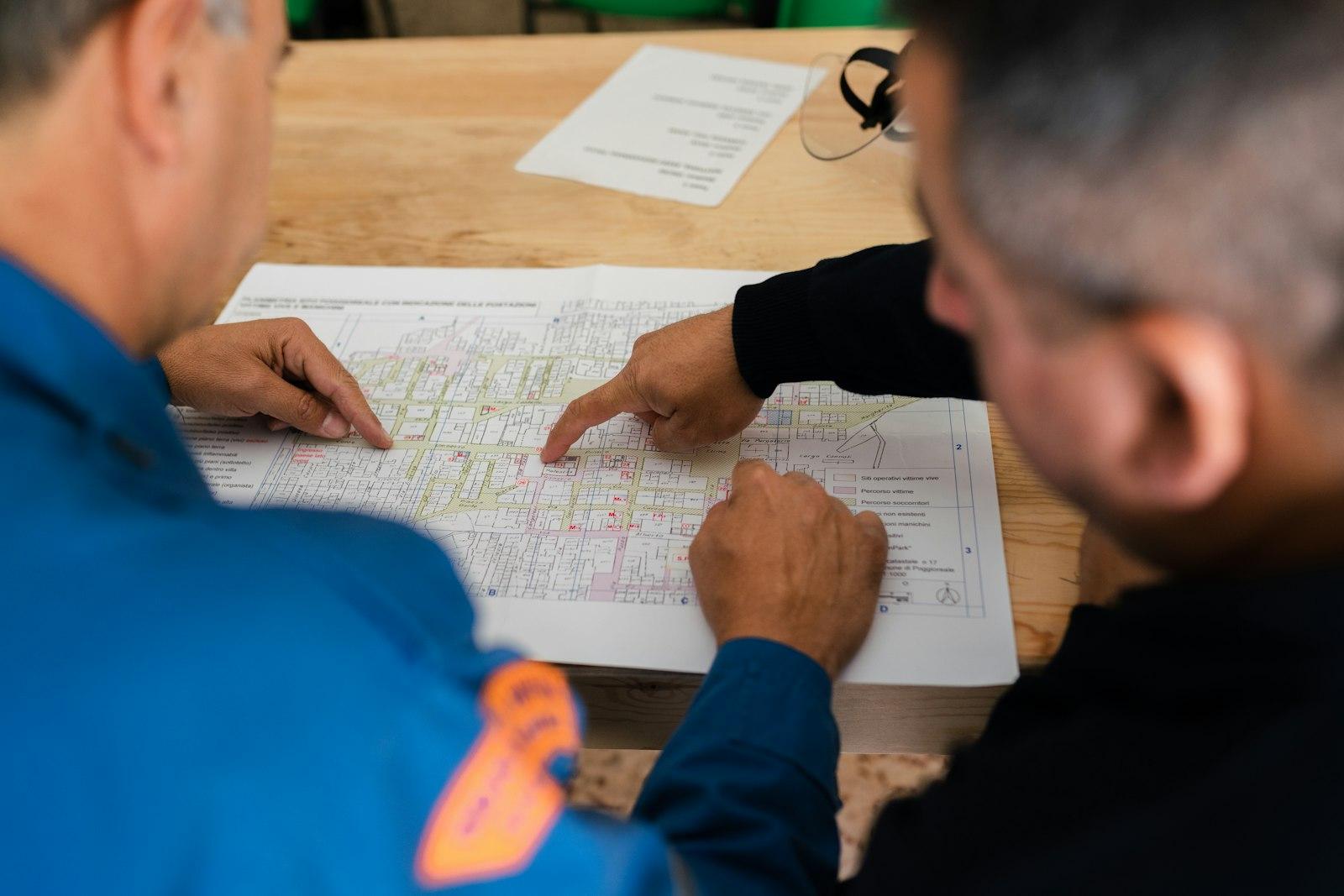
Your first decision is not the legal form but the scope of your trade. § 99 GewO describes the full Baumeister trade: designing and calculating buildings and civil engineering works, site management and supervision, construction and demolition, scaffolding with structural verification, project management, acting as the responsible builder (Bauführer) and representing clients before the authorities. If you mainly want to lay bricks, pour concrete and renovate, you often do not need that scope at all.
| Licence | What you may do | Qualification | Title |
|---|---|---|---|
| Baumeister (full scope) | Design, calculation, site management, on-site supervision (ÖBA), acting as Bauführer, construction, also as general contractor | Baumeister exam and practical experience (§ 1 Baumeister-Verordnung) | "Baumeister", "Baumeisterin" |
| Building trade restricted to construction work | Carry out all building work, but no design, calculation, site management or ÖBA | Experience as a self-employed person or operations manager (§ 2 Baumeister-Verordnung) or individual proof of competence (§ 19 GewO) | "Baugewerbetreibender" with a note of the restriction |
| Building trade restricted to specific activities | Only the work named in the decision, such as renovation or formwork | as above, relating to that activity | as above |
There are also two unregulated trades that people often mix up: Erdbeweger (earthmoving without structural relevance, according to the WKO only down to 1.25 m) and Eisenbieger (cutting and bending reinforcing steel, but no work on site). Neither needs a Befähigungsnachweis (proof of competence). For a firm that puts up building shells, they are not enough.
The Baumeister exam and required experience
Since August 2024 the exam has been governed by the Baumeister-Befähigungsprüfungsordnung 2023 and is placed at NQR level VII, on a par with a master's degree. It consists of three modules: you must pass module 1 (written, five subjects) first; after that you can take module 2 (written, five subjects) and module 3 (oral, before the full board) in any order. Preparation courses are offered, for example, by the regional Bauakademien (construction academies). Alongside a job, expect one to two years of preparation.
Passing the exam alone is not enough to register the trade. § 1 of the Baumeister-Verordnung also requires professional experience covering both design and construction:
| Prior education | Total experience | of which as site manager or foreman |
|---|---|---|
| Degree in architecture, civil engineering, construction management engineering or rural engineering (university or university of applied sciences) | 3 years | 2 years |
| Architecture at a university of the arts | 4 years | 2 years |
| HTL (technical college) for building technology | 4 years | 2 years |
| Apprenticeship as bricklayer, formwork builder, civil engineering worker, carpenter or construction draughtsperson | 6 years (not during the apprenticeship) | 2 years |
| Other technical building school | 6 years | 2 years |
For the restricted trade, § 2 of the regulation looks mainly at management experience: for example six uninterrupted years as a self-employed person or operations manager, or three years in that role after at least three years of training. Alternatively, the trade authority assesses an individual proof of competence under § 19 GewO based on certificates and records of your work.
Mandatory liability insurance: no policy, no registration
Unlike most trades, liability insurance in construction is a precondition for the licence. § 99 (7) GewO requires cover for personal injury, property damage and financial loss with an insurer licensed in Austria. For businesses up to the size of a large company under § 221 UGB (Austrian Commercial Code), the minimum is €1 million per claim, and the annual maximum may be capped at €3 million. Larger companies need €5 million per claim. The deductible may be no more than 5 % of the sum insured.
- You submit proof when you register the trade (§ 99 (8) GewO).
- If the insurance lapses, the authority must immediately start proceedings to withdraw the licence. If new cover is not proven quickly, the licence is gone within two months at most.
- Financial loss matters if you design: a calculation error in the structural analysis rarely causes property damage on handover day, but it can cause expensive repairs years later.
- Get at least two quotes. The premium depends heavily on turnover, the share of design work and whether you do civil engineering or demolition.
Bauführung, design and site coordination
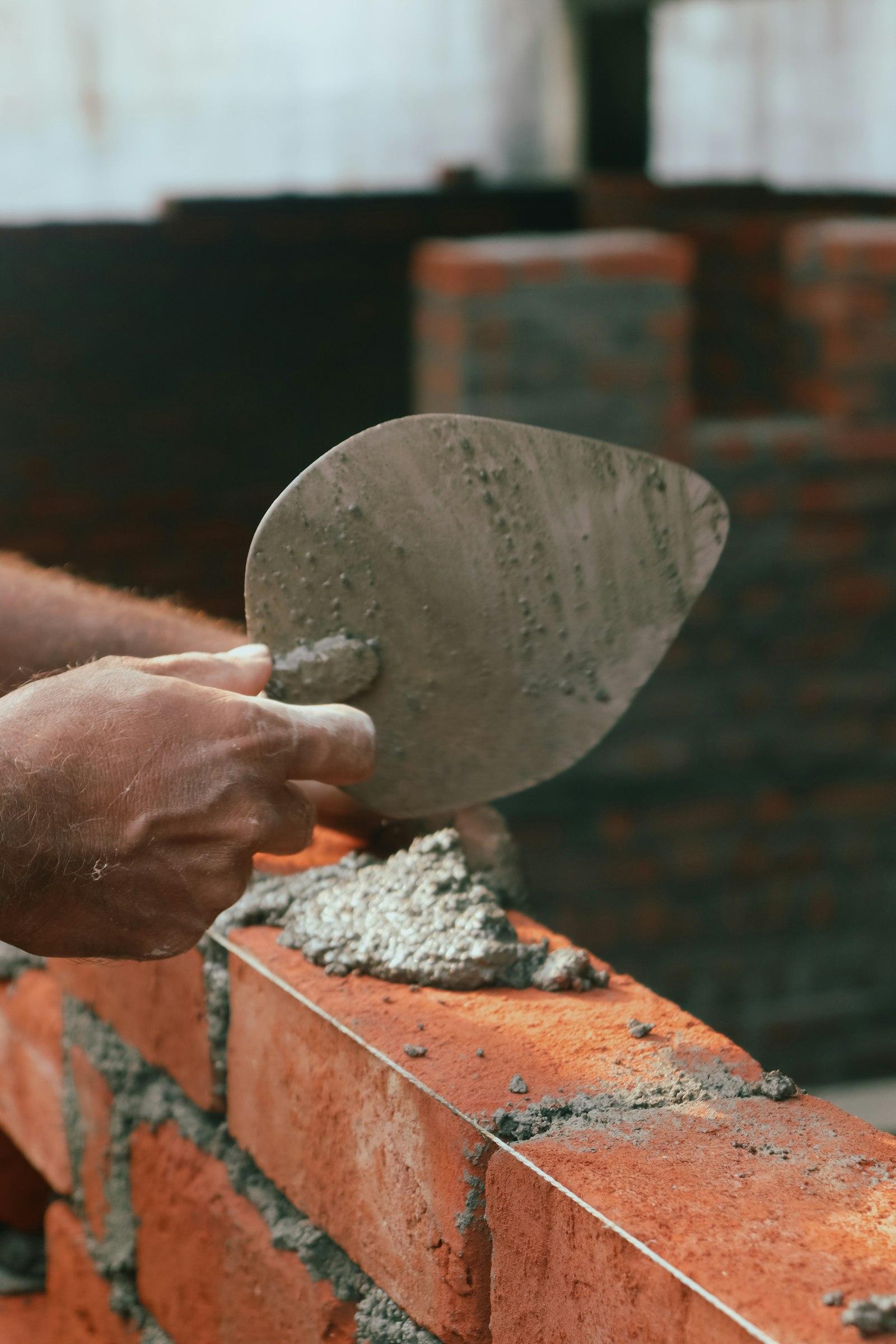
With the full scope you may draw up planning application drawings, act as Bauführer (the builder responsible to the authority) under the relevant regional building code and take on on-site supervision. As part of the Bauführung, § 99 (2) GewO also lets you take on, plan and manage work of other trades. You may only carry out part of it yourself, such as screed, drywall and certain insulation and waterproofing work. Electrics, plumbing or roofing go to licensed businesses.
One area many founders underestimate is site coordination under the Bauarbeitenkoordinationsgesetz (BauKG, Construction Work Coordination Act). When several firms work on a site, the client must appoint design and site coordinators who keep a health and safety plan. If the site lasts longer than 30 working days with more than 20 people working at the same time, or involves more than 500 person-days, an advance notice to the Arbeitsinspektorat (labour inspectorate) is due at least two weeks before the start (possible via the construction site database). For private clients this is new territory. If you offer coordination as a service, you give them a reason to bring you into the project early.
Staff, BUAK and client liability
As soon as you employ construction workers, the Bauarbeiter-Urlaubs- und Abfertigungsgesetz (BUAG, the construction workers' holiday and severance act) applies. Baumeister and bricklaying businesses are expressly named in § 2 (1) (a). You register your workers with the BUAK (the construction workers' holiday and severance fund) and pay monthly surcharges that fund holiday pay, severance and bridging pay. Bad-weather compensation is also handled through the BUAK. The upside: holiday entitlements move with the workers from firm to firm, so you do not have to save them up yourself. Wages and allowances follow the collective agreement for the construction industry and building trade.
The second point hits your bank account directly. Under § 67a ASVG and § 82a EStG, general contractors and other building firms are liable for the social security contributions and payroll taxes of their subcontractors, unless those are on the HFU-Gesamtliste (the list of firms exempt from client liability). Under § 67b ASVG, only firms that have carried out building work for at least three years in total and employ staff are admitted. As a new firm you are therefore not on it, and your client pays part of every invoice directly to the ÖGK service centre.
| Type of construction work | Social security (§ 67a ASVG) | Payroll taxes (§ 82a EStG) | Total |
|---|---|---|---|
| Subcontracted work (contract for work) | 20 % | 5 % | 25 % |
| Supply of temporary labour, including "machine with operator" | 32 % | 8 % | 40 % |
The amount withheld is credited to your contribution account, so it is not lost. But you are missing a quarter of the money exactly when materials and wages are due. Build this into your cash flow plan and negotiate interim payments on large jobs.
What the start costs
A building firm needs a lot of capital, but you do not have to buy everything. Many founders hire excavators and scaffolding per project and only buy what is in use every week. The figures below are rough guide values for a start with three to five people (as of November 2026, net):
| Item | Purchase (approx.) | Alternative |
|---|---|---|
| Flatbed or tipper up to 3.5 t, used | €25,000 – €45,000 | Leasing from around €600 a month |
| Mini excavator 1.5 – 2.5 t | €30,000 – €50,000 new | Hire around €120 – €200 a day |
| Plate compactor, concrete mixer, cut-off saw, laser, small tools | €8,000 – €15,000 | hire some of it |
| System formwork for foundations and walls | €10,000 – €30,000 | Hired formwork per project |
| Yard, container, site fencing | €5,000 – €15,000 | Rent space at a builders' merchant |
| Estimating and tendering software, laptop, phone | €2,000 – €5,000 a year | Subscription instead of purchase |
| Liability, contract works, machinery and vehicle insurance | €5,000 – €12,000 a year | Compare quotes |
| Website, logo, van lettering | see website costs |
On top of that come wage costs with BUAK surcharges, the Baumeister exam itself (fee plus courses, usually a few thousand euros in total) and a reserve for two to three months until the first final invoices are paid.
Roadmap to registration
Decide on the scope
Full Baumeister or restricted? Check which of your planned services require design and site management.
Prove your competence
Collect your exam certificate and proof of experience. Document your experience with employer references that describe design and construction work specifically, not just the employer's name.
Legal form and bank
Sole trader or GmbH (minimum share capital €10,000). Because of liability on site, many building firms choose a GmbH from the start, which is entered in the Firmenbuch (commercial register). Discuss a guarantee facility for retention bonds with your bank straight away.
Take out liability insurance
Take out a policy with at least €1 million per claim and request the confirmation for your registration.
Register the trade
Online via GISA (the Austrian trade register) or at the district authority or municipal office. Under the Neugründungsförderung (NeuFöG, the new business promotion act), many fees are waived. You become a member of the Landesinnung Bau (regional building guild) in the WKO and are insured with the SVS.
Tax office, BUAK, ÖGK
Apply for a tax number and UID number, register workers with the ÖGK and the BUAK before they start, and use AUVAsicher for occupational safety support.
How to get it right
- Look for your first jobs with private customers and small developers, where HFU liability plays no role
- Send every quote with rules for variations and an interim payment schedule
- Photograph sites from day one and keep the photos for references
Better not
- Advertise as "Baumeister" if your trade is restricted
- Start as a sub for a large general contractor without allowing for the 25 % liability amount
- Employ workers without BUAK registration: surcharges are charged retrospectively
Your building company online before the first shell goes up
We build you a free draft of your website with services, references and contact details. In three days you see how your business comes across online.
A free draft of your future business website.
Get noticed: clients search online first
Private clients now compare several building firms before asking for a quote. What they want to see: finished projects with location and build time, who is behind the company and whether you work in their area. A Google Business Profile with real site photos often brings more in smaller towns than any advert. Your website needs a complete imprint with trade, authority and chamber. Exactly what that looks like is in the article on mandatory information in Austria, and the imprint generator writes the text for you. To see how other building firms set up their sites, look at our construction and roofing examples.
Checklist: building company in Austria
- Scope of trade chosen (Baumeister or restricted)
- Exam certificate and proof of experience complete
- Liability insurance with at least €1 million per claim
- Trade registered via GISA, WKO and SVS sorted
- UID number and invoice template with reverse charge note
- BUAK registration and construction collective agreement checked
- Cash flow planned for liability amounts and interim payments
- Company name, van and website free of misleading titles
General steps that apply to every trades business are in the guide starting a trades business in Austria. If you are looking for staff, the article on finding employees helps.
Sources
- RIS – Gewerbeordnung 1994, § 94 (regulated trades)
- RIS – Gewerbeordnung 1994, § 99 (Baumeister)
- RIS – Baumeister-Verordnung
- WKO – Building: rules and trade registration
- WKO Upper Austria – Baumeisterprüfung
- RIS – Bauarbeitenkoordinationsgesetz
- RIS – Bauarbeiter-Urlaubs- und Abfertigungsgesetz
- RIS – ASVG, § 67b (HFU list)
- WKO Vorarlberg – client liability since 2026 (PDF)
- BUAK – Bauarbeiter-Urlaubs- und Abfertigungskasse